


Mature trees are one of the defining features of many Northern Virginia homes. In areas like McLean, Vienna, Oakton, Great Falls, and Fairfax, established tree canopies provide shade, privacy, and the character that makes these communities so desirable.
If your home sits beneath that kind of canopy, those trees do more than enhance curb appeal. They directly affect how your exterior performs over time. Shade impacts how materials age. Leaves and debris affect roofing and gutters. Root systems influence drainage. Even the way your home looks from the street can change depending on how dense the surrounding trees are.
If you are planning an exterior remodel, these are important factors to consider. When your design works with your environment, your home will not only look better, it will perform better and last longer.
Why Mature Trees Create Unique Design Conditions Around Your Home
Mature trees create a distinct environment around your home that differs from properties in full sun. This environment affects how moisture, sunlight, and debris interact with your exterior.
Depending on your lot, this may influence:
- How long siding and roofing stay damp
- How much direct sunlight reaches different areas of your home
- Where leaves and debris collect
- How water drains across your property
- How your home appears beneath a dense canopy
Because of these conditions, exterior remodeling often requires a more tailored approach. Materials, colors, and system design should be selected based on how your home actually performs within its surroundings.
How Tree Canopy Affects Exterior Materials
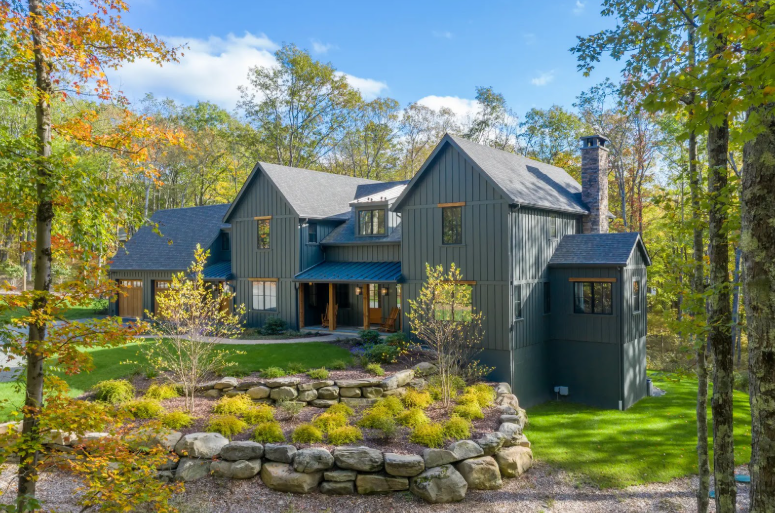
Homes under heavy tree cover experience more shade and moisture than homes in open areas. This can change how exterior materials age over time.
Moisture and Organic Growth
Shaded areas tend to stay damp longer after rain or morning dew. This creates conditions where algae, mildew, and moss are more likely to develop on siding, roofing, and trim.
Choosing materials that resist moisture and organic growth can help reduce maintenance and extend the life of your exterior.
Selecting Materials for Tree-Covered Homes
Some materials perform better than others in shaded environments. When planning your remodel, it’s important to consider how products will hold up under reduced sunlight and increased moisture.
This may influence your choices for:
- siding profiles
- roofing materials
- trim and fascia
- protective coatings and finishes
The goal is to select materials that work with your environment, not against it.
The Shade Reality: How Tree Canopy Affects Material Selection
Walk any established Northern Virginia neighborhood, and you’ll notice something interesting. Homes on the sunny side of the street age differently from homes perpetually shaded by mature trees. The siding weathers at different rates. The roofing shows distinct wear patterns. Even the paint holds up differently depending on the amount of sun exposure.
These differences aren’t cosmetic details. They’re fundamental factors that should drive material selection during exterior remodeling.
How Mature Trees Influence Exterior Color and Appearance
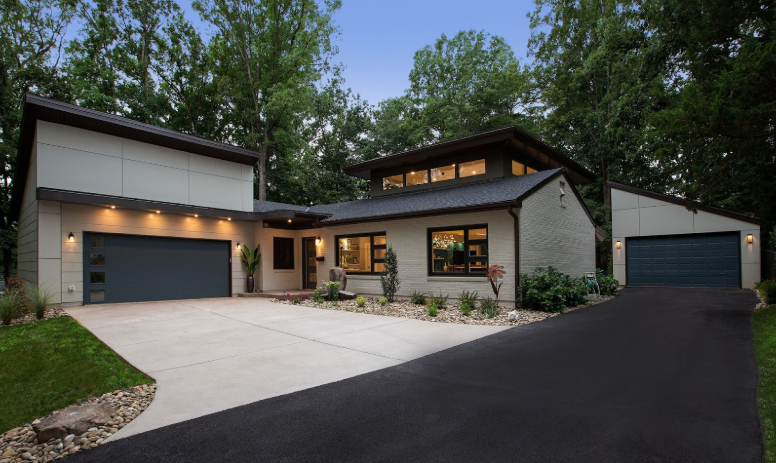
Tree canopy changes how light interacts with your home, which directly affects how exterior colors appear.
Color in Shade vs. Sunlight
Colors that look balanced in full sun can appear darker or flatter in shade. Lighter tones often feel more natural under tree cover, while darker colors may need contrast to avoid blending into the surroundings.
Creating Visual Balance
Large trees can visually overpower a home if the exterior lacks definition. Thoughtful use of contrast, trim, and material texture helps your home maintain presence beneath the canopy.
The right combination of color and detail allows your home to feel intentional and well-proportioned within its setting.
Designing Drainage and Gutters Around Mature Trees
Mature trees affect how water moves across your property. Their canopy redirects rainfall, and their roots influence how water drains through the soil.
How Roots Affect Drainage
Tree roots can change natural drainage patterns, sometimes causing water to collect in unexpected areas. This makes it important to plan grading and drainage carefully during an exterior remodel.
Gutter Systems for Tree-Covered Homes
Homes surrounded by trees typically deal with more debris. Leaves and branches can quickly clog standard gutter systems.
To improve performance, your gutter design should account for:
- Debris volume
- Downspout capacity
- Placement based on rooflines and tree coverage
- Ease of maintenance
A well-designed system helps protect your home from moisture-related issues.
Seasonal Challenges of Homes with Mature Trees
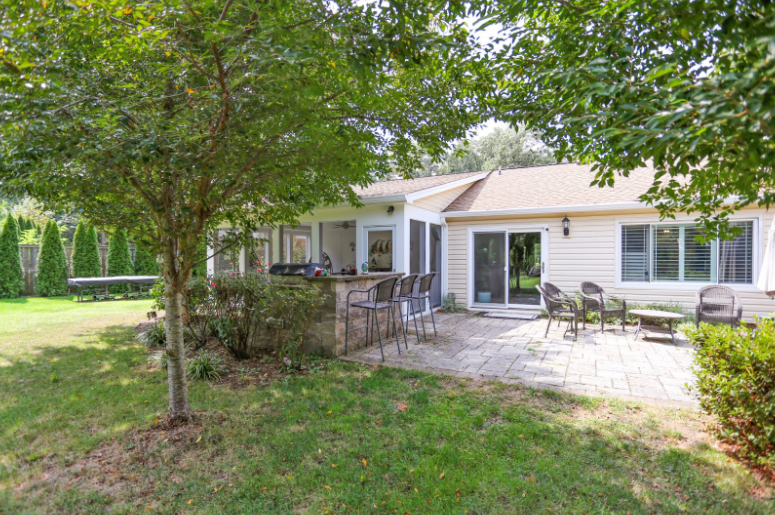
Tree-covered properties experience different conditions throughout the year. Your exterior should be designed to handle these changes.
Fall and Leaf Accumulation
Heavy leaf drop can collect in roof valleys and gutters, trapping moisture and blocking drainage. Without proper planning, this can lead to premature wear.
Winter and Storm Conditions
Snow and ice can accumulate on branches and fall onto your roof. Freeze-thaw cycles can also expose drainage issues.
Spring and Summer Growth
As trees fill in, shade and moisture levels increase again. Branch growth may also bring limbs closer to your home.
Designing for all seasons helps ensure your home performs consistently year-round.
How Exterior Design Can Work with Your Landscape
Mature trees are a valuable part of your property. The goal is not to design around them as obstacles, but to create an exterior that works in harmony with them.
When your design accounts for your landscape, you can achieve:
- Better long-term performance
- Fewer maintenance issues
- Improved visual balance
- A more cohesive overall appearance
Your home should feel connected to its surroundings, not disconnected from them.
Visualizing Exterior Changes on a Tree-Covered Property
It can be difficult to picture how materials and colors will look under a tree canopy. Lighting conditions change throughout the day and across seasons.
Using visualization tools or detailed design plans can help you better understand how your home will look in its actual environment before construction begins.
Planning an Exterior Remodel Around Mature Trees
If your home sits beneath mature trees, planning becomes especially important. Understanding your site conditions early can help guide better decisions around materials, drainage, and overall design.
Taking the time to evaluate these factors can lead to a more successful project and a home that performs well for years to come.
At Curb Appeal Exterior, exterior remodeling is approached with Northern Virginia conditions in mind. By considering how shade, moisture, and tree coverage affect your home, your exterior can be designed to feel cohesive and built to last.
If you are planning an exterior update, a consultation can help you better understand what makes the most sense for your home.
Frequently Asked Questions About Mature Trees and Exterior Design
How do mature trees affect exterior remodeling decisions in Northern Virginia?
Mature trees affect how your home’s exterior performs in several important ways. Shade can influence how materials age, moisture can linger longer on surfaces, and falling leaves can impact gutters and drainage. Trees can also affect how your home looks, changing how colors and architectural details appear from the street.
When these factors are considered during the design process, your exterior is more likely to perform well and feel cohesive with its surroundings.
What Exterior Materials Work Best for Homes Under Heavy Tree Canopies?
Homes under heavy tree cover tend to stay damp longer and receive less direct sunlight, which can affect how exterior materials perform over time. Choosing materials that resist moisture and organic growth can help protect your home and reduce maintenance.
In many cases, that includes siding designed to shed water effectively, roofing with algae-resistant protection, and trim materials that hold up well in consistently damp conditions.
The best material choices depend on your specific home, but selecting products suited to shaded environments can improve durability and long-term performance.
How Should Gutter Systems Be Designed for Properties with Mature Trees?
Homes surrounded by mature trees often deal with more leaves, debris, and concentrated water flow from the canopy above. Because of this, gutter systems need to be designed to handle heavier loads and prevent clogging.
This typically means using gutter guards to reduce buildup, ensuring downspouts can move water efficiently, and placing gutters and drainage points where debris naturally collects.
When your gutter system is designed with your tree coverage in mind, it helps protect your home from overflow, moisture issues, and unnecessary maintenance.
Do Mature Trees Increase Exterior Maintenance Requirements?
Mature trees can increase certain maintenance needs, especially when it comes to managing leaves, debris, and moisture. You may need to clean gutters more frequently, clear debris from roof valleys, and keep an eye on areas where branches come close to your home.
That said, thoughtful design and material selection can help reduce these demands. When your exterior is planned with tree coverage in mind, it can perform better and require less ongoing maintenance over time.
How Can Exterior Colors Create Proper Visual Balance with Large Trees?
Large trees can make a home feel more shaded and less defined from the street. Choosing the right exterior colors can help your home stand out and feel balanced within its surroundings.
In many cases, this means using colors that create contrast rather than blend into the landscape. Trim, accents, and architectural details can also help define your home and make it more visible beneath the canopy.
It’s also important to consider how colors will look in filtered light, since shade and seasonal changes can affect how your home appears throughout the year.
Should Trees Be Removed Before Exterior Remodeling?
In most cases, healthy mature trees do not need to be removed before an exterior remodel. They add value, provide shade, and contribute to the overall character of your property.
However, trees that are dead, damaged, growing too close to the home, or pose a safety risk may need to be evaluated.
For most homes, the better approach is to plan your exterior around the existing landscape. With thoughtful design and material selection, your home can work well with your trees rather than requiring their removal.
How Does Tree Coverage Affect Exterior Remodeling Costs in Northern Virginia?
Tree coverage doesn’t always increase the cost of an exterior remodel, but it can influence how your project is planned. Homes with mature trees may require more attention to drainage, gutter systems, and material selection to handle shade, moisture, and debris.
In some cases, this can affect the overall investment. However, planning for these conditions from the start often helps prevent premature wear, ongoing maintenance issues, and costly repairs later on.
About the Author
Andrew Schroeder brings decades of experience in exterior renovation and design-build construction to homeowners across Northern Virginia. As the founder of Curb Appeal Exterior and part of the Schroeder Design Build legacy established in 1986, he has led hundreds of exterior remodeling projects throughout Fairfax and surrounding communities.
His work focuses on thoughtful, design-driven solutions that improve both the appearance and long-term performance of a home. In addition to his professional work, Andrew is committed to supporting the local community, with a portion of each project contributing to K–12 education initiatives.